


How to Reduce Apparel Return Costs and Recover Resale Value
Top posts


Apparel returns management is the process of receiving returned clothing, inspecting it, grading its condition, and routing it to the right next step: back to stock, to an off-price channel, or out of inventory. The goal is to recover as much resale value as you can.
Returns are one of the more expensive parts of fashion e-commerce logistics, and for apparel, one of the hardest to get right. NRF research puts the online return rate at nearly one in five orders, and apparel sits well above that. Every one of those returns costs more than the refund the customer gets back.
This guide breaks down what apparel returns really cost, how the returns process works, and what helps brands restock faster and keep more value.
Why Apparel Returns Happen
Online apparel return rates usually land between 20% and 40%, against roughly 10% in physical stores. Most of that traces back to four things.
- Fit and size. Sizing isn't consistent between brands. A medium at one label wears like a small at another, and stretch, rise, and cut all change how a garment sits. No size chart closes that gap completely.
- Quality and damage. Loose stitching, thin fabric, a broken zipper, or damage in transit sends an item back for reasons that have nothing to do with whether the customer liked it.
- Style or color mismatch. A color reads differently on a screen than in daylight. A dress photographs structured and arrives soft. The bigger the gap between the listing and the garment, the more comes back.
- Bracketing. A shopper buys the same piece in two sizes, keeps one, returns the other. It's routine in fashion because people don't trust online fit enough to commit to a single choice.
Most of these are fixable, and that's where cost control starts.
What Apparel Returns Cost Brands
The refund is the small part. The real cost is everything that happens after the box arrives. A rough per-return breakdown:
Those numbers climb once an item needs steaming, spot cleaning, or a fresh poly bag before it can sell. Some estimates put the full cost of processing a return at as much as 65% of what the item originally sold for, once you fold in shipping both ways and lost resale value.
Fraud piles on. The NRF found that 9% of all returns are fraudulent, and apparel is an easy target because a worn item can be sent back looking new.
Then there's time. Apparel is seasonal, so a returned piece loses value every week it sits unprocessed. The cost of a return isn't fixed when it lands. It keeps growing until someone deals with it.
How to Reduce Apparel Return Costs
Before you work on cost, it helps to have the basics in place that keep the return rate down to begin with: accurate pick-and-pack, a return policy that matches your resale window, and honest product pages so shoppers get the right item the first time. That lowers the volume, but it only goes so far. Fit and taste mean some apparel always comes back.
The bigger lever for most brands is the cost of each return that does arrive, and that comes down to how your returns process runs.
Streamline and Optimize the Returns Process
That flow is the easy part to draw and the hard part to run. What separates a returns operation that holds its margin from one that bleeds it isn't the steps, it's the discipline around them. A few things do most of the work.
Standardize instead of improvising. The biggest hidden cost in returns is inconsistency: two people grading the same garment two different ways. Grade too hard and a sellable piece gets liquidated. Grade too soft and a worn one goes back on the shelf and comes back as a complaint. Written inspection and grading rules, applied the same way on every shift, close that gap. They also catch wardrobing reliably, which matters more than it sounds: a 2024 Optoro survey found 69% of shoppers admit to buying something, using it, and sending it back.
Document condition before you touch anything. A photo at intake takes seconds and gives you a record if a refund dispute follows. It costs almost nothing and saves the argument later.
Cut the handoffs. Every time a garment changes hands or jumps to another system, you add labor and another chance to misgrade. When one team and one inventory record cover picking, shipping, and restocking, returns move in a closed loop instead of a relay.
Make borderline calls cheap to make. If staff have to escalate every questionable item, throughput collapses during a surge. Thresholds specific enough to decide on the floor, this wear level steams, that one liquidates, this packaging restocks, keep the line moving.
Get those right and the cost per return drops while fewer worn items slip back into new stock. A leaner process also gets garments back to sellable condition faster, which is where the second half of the job begins: recovering their value.
How to Recover Resale Value From Returned Apparel
By now the garment is back and graded. What's left is recovery: getting as much of its value back out as you can. That comes down to moving quickly and routing each piece to its best outcome.
How Fast Resale Value Drops
This table is a planning model. Exact recovery rates shift with category, price, and season, but the shape holds for most apparel.
Every day in a bin pushes an item further down this table. Apparel loses value faster than most categories, so quick intake isn't a bonus. For seasonal stock, it's the difference between full price and liquidation.
Route Each Item to the Right Place
Grade it, then send it where it belongs. Like-new goes straight back to sellable stock. A bit of packaging damage might just need a new bag or tag. Light wear might need steaming, a spot clean, or a small repair first. Once a piece isn't worth full price, it should move to liquidation or an off-price channel instead of sitting around. Returns that never get a decision become deadstock clothing: they eat space, tie up cash, and lose value every week.
Push Exchanges Over Refunds
An exchange usually recovers more than a straight refund, because the money stays with you and the shopper still gets what they wanted. It only works when the replacement is in stock, which is one more reason restocking speed matters. Store credit is the next best thing. Status updates help too: a customer who knows their return was received, checked, and resolved is less likely to file a dispute, and disputes cost you to handle.
Where In-House Returns Strain
The steps aren't complicated. Keeping them consistent at apparel volume, every week and through the seasonal spike, is where in-house operations tend to crack. Grading drifts from shift to shift as volume and turnover rise. Intake fights outbound for the same hands, and when intake loses, returns sit and lose value. The post-holiday surge crams the year's returns into a few weeks, usually seasonal stock whose resale window is already closing, and demands temporary labor you carry the rest of the year for nothing. All of it lands at once, right when an in-house team has the least room to absorb it.
Hand Your Apparel Fulfillment and Returns to Ops Engine
Ops Engine is a Los Angeles 3PL, and apparel fulfillment services is one of our strongest verticals. Returns processing is part of a full operation that also handles storage, pick and pack, daily fulfillment, and FBA prep, all on one inventory system at our Valencia facility.
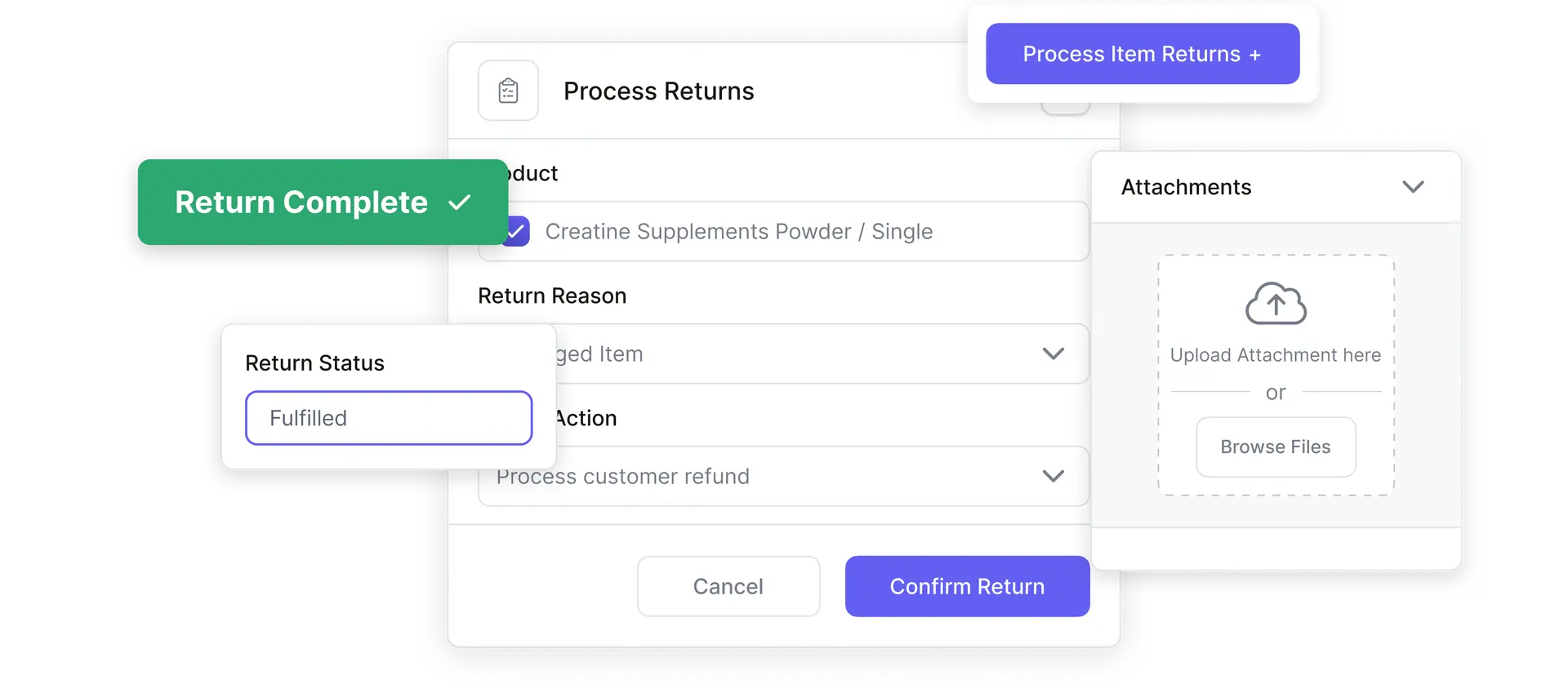
The team that restocks a garment is the same one that picked and shipped it, so returns run through a single closed loop: inspected, graded, and back in sellable stock within 24 to 36 hours of arriving. That protects both back-in-stock rates and resale value. For an apparel brand, it means returns and fulfillment under one roof, consistent grading that keeps worn pieces out of new stock, and the capacity to absorb the post-holiday surge.
Run returns in-house, or hand the whole apparel operation to one partner. Contact us to find where your resale value is leaking.
Frequently Asked Questions
What is apparel reverse logistics?
It's the path a returned garment takes from the customer back to the warehouse, where it's received, inspected, graded, and sent on to its next step: restock, re-bag, liquidation, or out of sellable inventory.
How long should it take to process a clothing return?
As fast as you can manage, ideally within hours and no later than a couple of business days. The longer a return waits, the more resale value it bleeds.
How quickly should returned apparel be restocked?
As soon as it clears inspection, ideally inside 24 to 48 hours. Quick restocking gives the piece its best shot at selling in season and near full price.
What KPIs should brands track for apparel returns?
Return rate by SKU, reason codes, restocking time, resale recovery rate, refund-versus-exchange split, and how many returns trace back to fulfillment errors. Inventory visibility matters too. Ops Engine gives brands real-time dashboard access, with metrics you can tailor to your business.
See more articles



.png)


