


A Supplement Brand's Guide to Return Handling and Restocking Decisions
Top posts


A returned bottle of supplements is not the same problem as a returned t-shirt. You cannot steam it, refold it, or put it back on the shelf on sight.
Effective reverse logistics for supplement brands is about more than processing returns. It provides a consistent framework for deciding what can be restocked, what must be quarantined, and what should be destroyed. Without that process, brands either take unnecessary compliance risks or lose money by discarding perfectly sellable inventory.
Why Supplement Returns Require a Structured Handling Process
Dietary supplements are regulated differently than general merchandise. They are consumable, and current good manufacturing practice requirements for dietary supplements call for returned product to be identified and held separately until quality personnel review it and make a documented decision about what happens to it next, rather than letting it go straight back into stock.
That regulatory backdrop is why a generic reverse logistics workflow, built for apparel or general merchandise, does not hold up for returned supplements. Brands need internal quality procedures that reflect it, on top of whatever their standard returns process already covers.
In practice, this comes down to three questions, answered the same way every time:
- What condition did the product come back in?
- Can that condition be verified against packaging and lot data?
- What does the answer mean for inventory: restock, quarantine, or remove?
Skip a consistent answer, and the decision ends up shaped by whatever already happened upstream, like a refund already issued or a support ticket already closed, rather than by what the product actually looks like on arrival.
Reverse Logistics Workflow for Returned Supplements
A returned unit moves through three stages before anyone decides what to do with it.
- Intake and inventory tracking. The unit is logged against a return authorization and tracked as its own inventory movement, tied to its lot and original ship date. Skip this, and every decision after it becomes guesswork.
- Product inspection. This is where the unit earns or loses its shot at restocking. Inspectors check the outer packaging, the tamper-evident seal, signs of partial opening, damage, leakage, and anything suggesting improper storage in transit.
- Disposition. Every inspected return lands in one of three places: cleared for restock, held for further review, or routed for removal. Nothing sits without a status.
The inspection step is deliberately separate from the refund decision. What a customer says when requesting a return and what the warehouse finds on arrival are two different data points, and only the second one should decide the inventory outcome.
How Supplement Brands Decide Whether Returned Products Can Be Restocked
Three factors decide the outcome of a return inspection.
A few things worth flagging beyond the table:
- A broken seal disqualifies a unit regardless of how much product remains inside.
- A missing or unreadable lot code means no restock, even on a sealed, undamaged unit, since there is no way to confirm the lot is not under a hold.
- A cleared return already used part of its shelf life once. It needs to be flagged for priority picking ahead of newer stock, not filed in behind it. Skip this, and the same unit gets disposed of twice, once as a return and again later as expired stock.
Common Mistakes Brands Make With Supplement Returns
Most restocking problems trace back to a handful of repeatable mistakes.
- Restocking based on the customer's description alone. A refund gets issued on the promise that a bottle is unopened, and by the time it reaches the warehouse, there is pressure to just restock it and close the loop instead of inspecting it independently.
- Skipping lot verification. A sealed, undamaged bottle still is not restock-eligible if nobody checks whether its lot is under a recall or quality hold.
- Mixing quarantined and sellable inventory. Without a hard system-level hold, a quarantined unit can still show as available and get picked for another order.
- Leaving returns in quarantine indefinitely. The higher cost is often not over-caution; it is nobody having standing authority to approve disposal, so units sit unresolved for months, taking up space and inventory value that never gets recovered either way.
"We have seen quarantine shelves holding stock for months with no one authorized to approve disposal. That space and that inventory value never get resolved either way, and it usually traces back to one missing thing: nobody was ever assigned to make the final call."
Arsen Janikyan, Founder, OpsEngine
What Happens to Supplements That Cannot Be Restocked
A return that fails inspection follows its own path, separate from sellable stock, until it is fully cleared out of inventory.
Quarantine. Failed returns move to a dedicated quarantine location immediately, with a hold status in the inventory system that blocks them from being picked or counted toward available stock.
Disposal and inventory disposition. Once a unit is confirmed unsellable, it is removed from inventory records and disposed of through a documented process. The record matters as much as the disposal itself. A clear trail of what was removed, when, and why protects the brand if a question about missing inventory comes up later, and keeps counts accurate for reordering.
Creating a Return Handling SOP for Supplement Fulfillment
A standard operating procedure, or SOP, is a written set of rules that turns the process above into something repeatable, so a return gets the same decision no matter who is handling it that day. For supplement returns, the SOP should cover:
- Restocking criteria, stated in specific terms: seal condition, minimum remaining shelf life, and lot verification requirements
- Priority allocation rules for cleared returns, so they are picked ahead of newer stock
- Named ownership, so someone has standing authority to inspect, approve disposal, and document the outcome, rather than routing every decision back as a one-off approval
The same criteria that drive the SOP should also shape the supplement return policy customers see at checkout. If a policy promises refunds on opened product without mentioning that it cannot be resold, the brand is setting an expectation its own inventory rules cannot support.
Managing Supplement Returns With a 3PL Partner
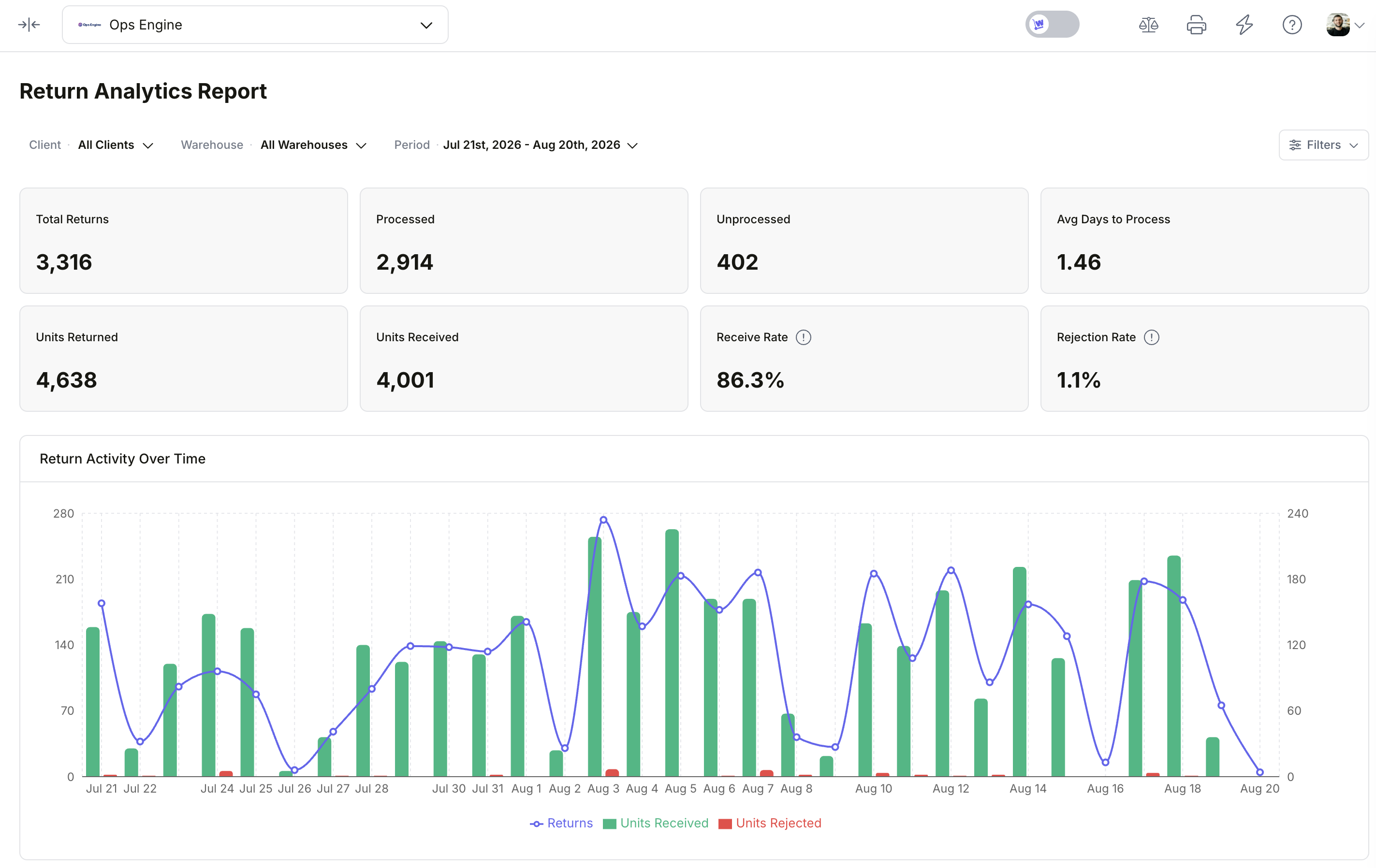
Whether returns are handled in-house or through a supplement fulfillment partner, supplement reverse logistics needs to run the same way every time: intake, inspection, decision, documentation. A fulfillment partner should be able to walk through exactly how a return moves through each step on their warehouse floor, including who is authorized to close out a disposition.
When evaluating a returns management partner, look for:
- A dedicated quarantine area, physically separate from sellable stock
- Lot numbers logged at intake, not only at outbound shipping
- A named owner for disposal approval
- Priority allocation logic that picks restocked units ahead of newer stock
- Supplement quality control practices that are documented, not informal
This connects to broader supplement inventory management practices. Lot-level tracking that starts at receiving and carries through returned supplements keeps stock counts accurate and keeps a brand from reordering product it already has sitting in quarantine.
Ops Engine handles supplement returns within the same lot-level tracking system used across inbound and outbound inventory, so a returned unit is tied to its lot and condition from the moment it arrives back at the warehouse.
See more articles


%20(1).jpg)

.png)


